

Post WWII
Post 1950s
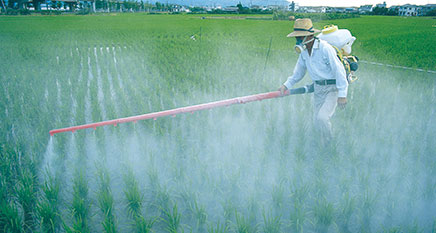
Countries around the world have applied so-called conventional farming in agricultural development, which refers to large-scale farming utilizing pesticides and chemical fertilizers. However, after two decades of eating produce grown using such method, many chronic diseases have emerged, including the illness that everyone is so fearful of: “cancer”.
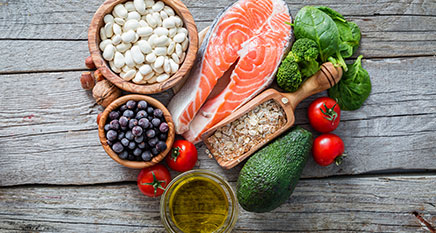
As a result, traditional agriculture such as “whole foods” and “organic agriculture” are once again under the spotlight. Furthermore, it is fashionable for people who are health or macrobiotic conscious to pursue healthy food ingredients. However, “organic agriculture” places stringent demand on the environment, and the fact that the legal definition of organic agriculture is extremely vague has led to the misuse of the moniker “organic” on the market. Consequently, often products sold under the organic label are not genuine organic products.
Introduction
The hazard brought about by conventional farming has spurred on the emergence of organic food. However, organic agriculture entails an adherence to strict guidelines
and most organic products on the market are not authentic, making the phrase organic a tool for merchants to charge consumers excessively.
With the dire problem faced by Chinese farmers endangering their very livelihood, coupled with the issue of food safety, Dazzeon New Agriculture was founded to become a solutions provider.
Evolution of agriculture
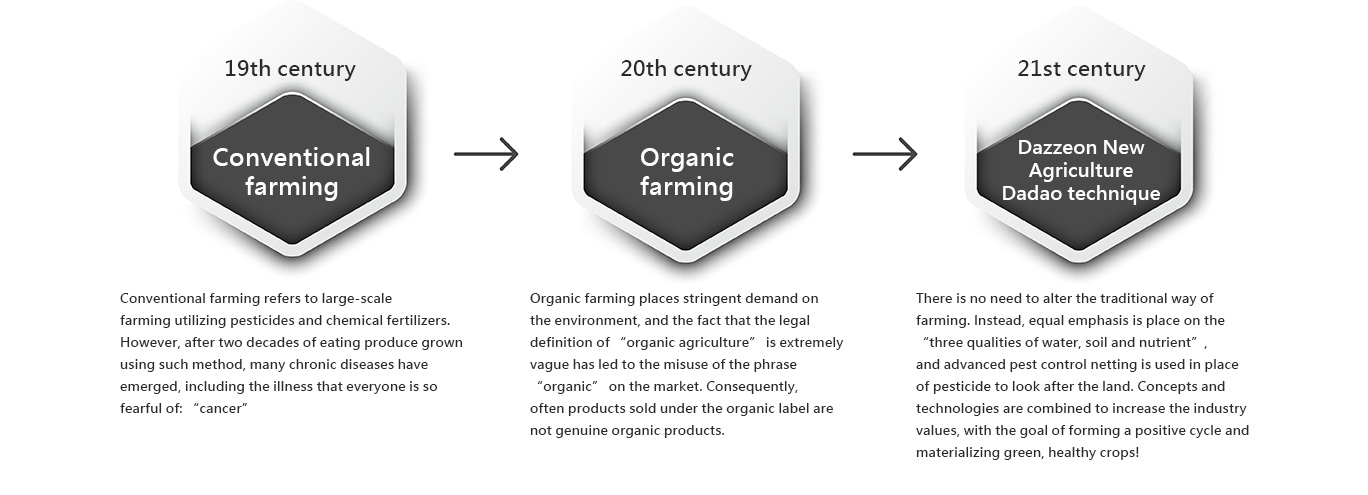
“Dadao represents decency and magnanimity. We don’t claim to be organic, because we are superior to organic farming. This is the essence of Dazzeon New Agriculture”
Agricultural production and marketing – Behavior model
Consumers are directly linked to farmers, and every integral part of the industry chain is closely connected to form a complete, positive new farming ecological circle and structure.
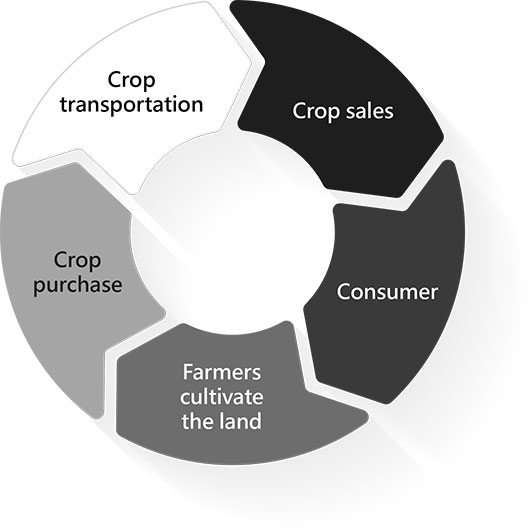
Consumer
As the top end of the ecological chain within the new agricultural system, you are the sole reason for the existence of the ecological circle.
- The annual order is customized according to each family’s age composition, eating habit, medical history and the changing seasons.
- Based on your order, we will supply you with the most natural, freshest and safest vegetables once a week.
- Just inform us the vegetables you don’t fancy eating, and we will select the most nutritious seasonal vegetables for you each season.
Farmers cultivate the land: Let some of the farmers become wealthier first
- Role switching: Farmers with qualified farmland may join the new agriculture ecological circle (one registration per household). Each month, NT$2,000 is disbursed to each farmer to subsidize their human labor cost, thereby switching the roles.
- Increase income: Farmers cultivate crops based on the consumers’ orders; if there are no orders, the farmers will focus on maintaining the land. If the farmer’s produce reach the purchasing standard each year, Dazzeon will return 20% of the marketing income to the farmer. By cultivating according to orders, farmers will be able to completely eliminate the discrepancy between cultivation and selling, so they can concentrate on cultivation with peace of mind. If the farmer fails to meet the purchasing standard, he will be disqualified in order to incentivize farmers to dedicate to cultivation.
- Joint responsibility: Vegetables cultivated by each farmer bear serial numbers, and the joint responsibility system is established, so that when vegetables with a certain serial number is discovered to contain pesticides or chemical fertilizers, the farmer, team leader, manager and general manger will all be held accountable. Moreover, the entire cultivation line will be eliminated from the system.
- Dadao agriculture: Our products are not organic, they are superior to organic products, because we do not use chemical fertilizers, pesticides or additives in order to return life to the land. As a result, the land will return life to its creation!
Crop purchasing
We have a proprietary crop purchasing station staffed by professional technicians to conduct inspections in order to control product quality. Our products are centrally managed in terms of cultivar, quantity and quality to ensure the farmers’ income and monitor quality. This approach completely resolves problems such as regional/structural surplus and deficit, thereby eradicating the phenomenon of “buying difficulty” and “selling difficulty”. The positive outcome is significantly improved enthusiasm among farmers and zero resource waste.
Crop transportation
Proprietary logistics management.
- Nanophase material packing and refrigeration technology completely eliminates secondary pollution and lengthens the shelf life of food. Vegetables and fruits can stay fresh for up to 7 days.
- Special nano packing box features the user’s serial number; therefore, each user has a unique packing box to ensure complete hygiene and safety throughout the year.
- Compartmentalized interior: First compartment for vegetables, second compartment for melons and fruits, third compartment for rice and noodles, fourth compartment for meats.
Crop sales
Proprietary product sales channel that is transparent and simple. The vegetable cultivation area is less than 200km away from the user’s residence to ensure that fresh vegetables with the right quality and quantity are delivered safely to your doorsteps. As a result, a long-term, stable mutual relationship is established between the buyer and seller.